
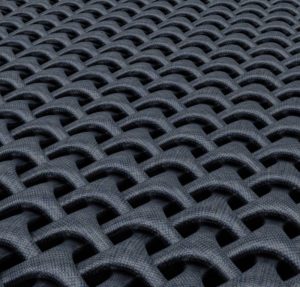
Modern infrastructure projects demand materials that not only enhance performance but also ensure long-term durability and environmental stability. Among the most innovative materials used in civil engineering today are geotextiles—a class of synthetic fabrics designed to improve soil behavior, enhance drainage, and strengthen structural foundations. In port and road construction, geotextiles play a vital role in improving ground stability, preventing erosion, and extending the lifespan of pavements and embankments.
Geotextiles are typically made from polypropylene or polyester fibers, engineered to perform various soil stabilization functions such as separation, filtration, reinforcement, drainage, and protection. When laid between layers of soil or aggregates, these fabrics act as a barrier that prevents the mixing of materials, ensuring a stable and uniform foundation. This separation minimizes settlement, rutting, and deformation—common issues that often compromise the performance of roads, ports, and coastal infrastructure.
In road construction, geotextiles are widely used beneath pavements and embankments to reinforce weak subgrades and improve load distribution. By controlling the intermixing of soil and base materials, they enhance structural integrity and reduce maintenance requirements over time. Additionally, geotextiles facilitate proper drainage by allowing water to pass through while preventing the movement of fine soil particles. This helps maintain dry, stable conditions under road surfaces—critical for preventing potholes and premature pavement failure.
In port and coastal applications, geotextiles are used in retaining walls, breakwaters, and embankments to control erosion and stabilize shorelines. They serve as a filter layer beneath riprap or armor stones, preventing soil loss caused by waves and tidal forces while allowing natural water flow. Their high tensile strength and resistance to chemical and biological degradation make them ideal for harsh marine environments where long-term durability is essential.
Beyond functionality, geotextiles contribute to cost savings and sustainability. By reducing the need for extensive excavation or expensive fill materials, they lower construction costs and project timelines. Their lightweight nature also simplifies transportation and installation, further enhancing overall efficiency. Moreover, by extending the service life of infrastructure, geotextiles help reduce the frequency of repairs and replacements—aligning with global efforts toward more sustainable construction practices.
In conclusion, geotextiles are an indispensable component in modern port and road construction. They offer a smart combination of strength, flexibility, and environmental performance that ensures long-lasting stability and protection. Whether used in large-scale marine engineering or roadway development, geotextiles continue to redefine the standards of durability, safety, and sustainability in the construction industry.